
I am always in search of a better mouse trap. As far as handgun hunting and accuracy goes optics will give you a leg up over iron sights. When I started handgun hunting I moved to pistol scopes fairly quickly like most handgun hunters.

It didn’t take long for me to realize the limitations of a magnified optic on a handgun. They can be difficult to hold steady in field positions, the eye relief can be an issue as you change body position, light transmission at sunrise and sunset is minimal, and getting on target tends to take more time.
Where I Began
Over 20 years ago now I got my start with red dot optics. The first was an Ultradot tube sight.

I quickly found red dot sights to be very advantageous for field shooting. With unlimited eye relief they were easier to use in field positions, faster on target due to the wider field of view, and they worked better in low light. As time went on I experimented with a new type of dot sight that was becoming prominent on the market, the reflex.

The reflex has all of the advantages of the tube style dot with the additional advantage of its smaller size. The smaller size allows for it to be adapted to firearms requiring a smaller foot print including semi autos.

Reliable
Over the last decade we have seen a great deal of improvement in the reliability and durability of the reflex sights. They have improved so much that gun manufacturers have a focus on new firearms being “optics ready” right out of the box.

Most of these new optics ready firearms are semi auto pistols where the dot is mounted directly to the slide.

A reflex dot sight has to be very durable to survive “slide riding” on a semi auto. The largest magnum revolver doesn’t compare to the type of abuse a semi auto pistol applies to an optic as the slide reciprocates. In the early days of the reflex sights we would direct mill slides for red dots and say a little prayer in hopes the dot would stay together. I can’t count how many of those early dot sights I had to send back for warranty work to various manufacturers; but in todays world that’s hardly a thought with the currently available dot sights of quality manufacture.
Wheelguns are not forgotten!
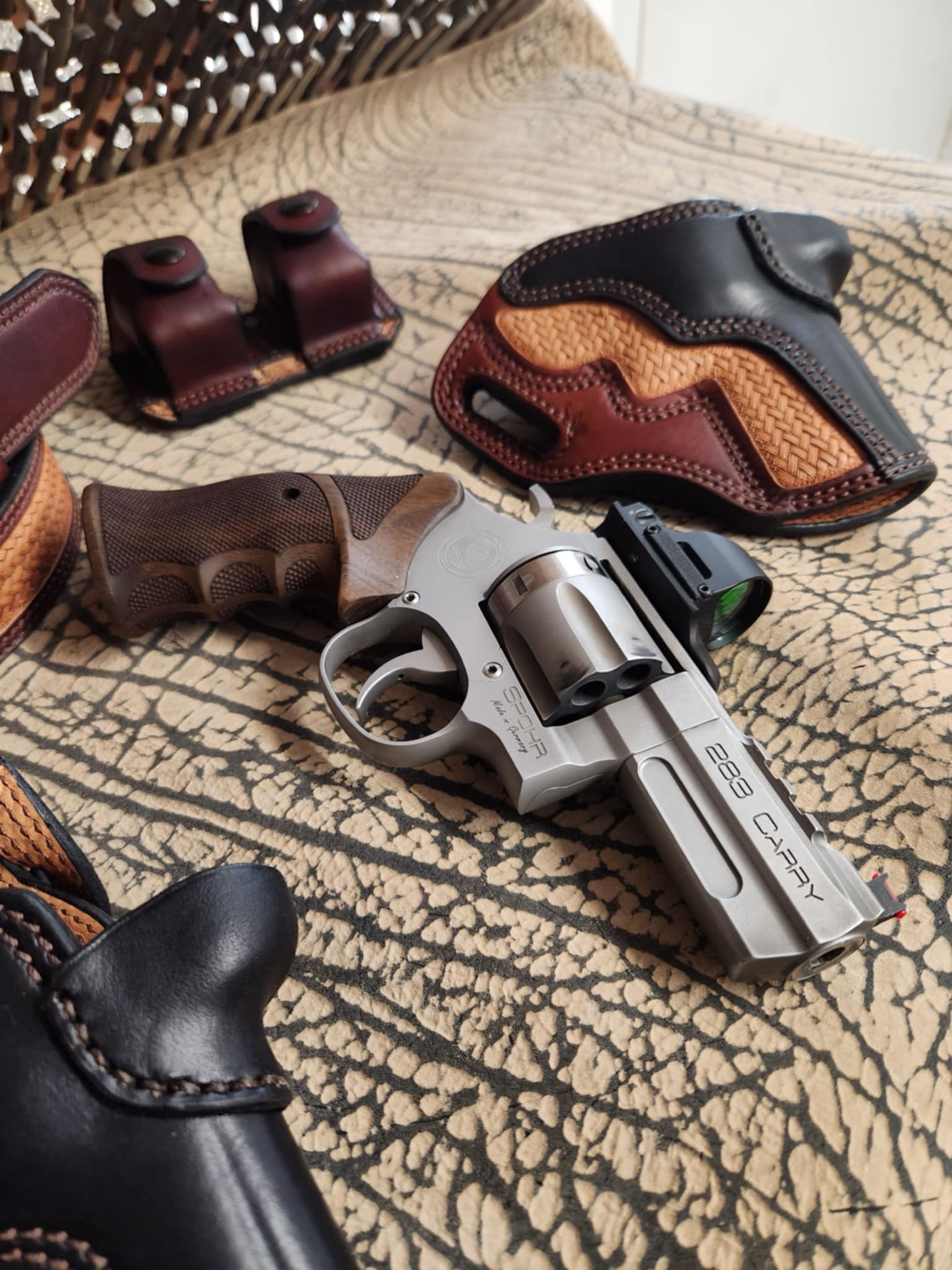
Don’t worry, your revolver can also use these dot sights. Adapter plates are available from multiple manufactures to fit these dots to multiple makes of revolvers as well.


The key advantage to the small reflex style dot sights over the larger tube style is their size. With their smaller size they can be mounted on more types of firearms, take up less space, and be of a size that allows for more holster options as well.
New Product
Every once in a while something new comes out with features that are note worthy enough to grab my attention. The reflex dot sight world is rapidly evolving. We have seen lens size grow to the point of absurdity, glass quality improve, durability improvement, and of course battery life improvement.

Ultradot sent me two of their new prototype sights a few months ago and I have been testing and abusing them since. Their new Prime XT reflex sight has a host of features that place it high up on the reflex food chain.

Some of the features of the Prime XT are:
- 20,000 hour battery life
- Multi-coated aspherical lense
- RMR footprint
- 10 brightness settings
- Side load battery tray
- Low rear deck height with rear sight groove to aid in co-witness applications.
Key Features
There are two key features that stood out to me as soon as I picked up the sight. The first was glass quality.


Glass Quality
If you look through the lens in the pictures above you can see how the background color is not changed and the image is not distorted by the lens. Many of the reflex sights that are produced skimp on the glass quality, Ultradot does not. The glass clarity is important to me as a precision shooter. If I can’t see the target, it’s awful difficult to hit it. The farther I push the distance and accuracy the more the glass matters. If you have followed along for some time you know I like to shoot a wheelgun over a couple football fields end to end at some really small targets.

Intensity Control
The other improvement that finished setting the hook was the dots brightness or intensity settings. With a full 10 brightness settings I am able to set the dot super bright for full sun shooting or dim it all the way down for low light. This is an area almost all other dot sights fail for me in the hunting world. When hunting the timber in the west I can find myself needing all of the brightness possible one minute and needing the exact opposite the next. If you can’t turn the dot down low enough you will be unable to acquire a good sight picture for a precision shot in low light and the hunt will be over.
Testing
As stated, I have been abusing these Ultradot Prime XT sights as much as possible. The first series of tests involved mounting them on as many firearms as possible. Mounting and remounting optics can apply all different types of stress on the optics body as you tighten them down. This has lead to tube sights, magnified optics, and reflex sights failing.


The Ultradot handled this test well and in fact those same two sights are the ones I am using in Action Pistol and USPSA now!


These sights continue to take a pounding as I push 2000 rounds or more a month in practice and competition. They have held zero and remain free of defects, and these are just the prototypes!
Second to None
Now you have heard me talk up Ultradot before, and there is good reason. Their tube sights are second to none and this reflex is no different. What is different here is just how many brands and models of reflex sight I have used over the last couple decades.


Comparison
The above pictures are just a small sample of the reflex sights I have used. I have also run Leupold, Bushnell, Vortex, Holosun, Cmore, and I am sure I am leaving some out.
The reflex sight(s) that everyone measures the quality of an optic against is the Trijicon RMR/SRO. Trijicon is well established in the reflex market commanding military and LE markets. As you can see above I have been successful in the field with Trijicon products and I even use some to this day. So how does the Ultradot Prime XT stack up? Let’s dive right into that.
First off, there are two different types of dot sight shooting methods. For speed shooting at modest range targets like seen in USPSA shooting you will do target focus. Target focus means you focus on the target, when you see just a flash or streak of the red dot across the target you press the trigger. This is the same method used in defensive shooting with a dot sight.
The other method, dot focus, comes into play when precision is required. As the distance extends to the 50 yard line and beyond and you are trying to shoot a smaller target you have to revert back to this method.

This method is the same as when you shoot magnified optics or iron sights for precision. The reticle/front sight is in perfect focus and the target is out of focus.
For target focus shooting, any red dot sight of quality is capable of performing this method. Optical clarity, brightness control, and so on matter little for this.
Once we switch to dot focus; the world is different.
Dot brightness has been an issue for me in low light shooting where precision is required. If I can not turn the dot down low enough the dot will keep me from being able to see the target. Similar to a light being shined back into my eyes. Both the Trijicon RMR and SRO have 8 brightness settings. I have had issues at last light with the SRO in the field due to the lack of ability to turn it down low enough. Ultradot has attacked this issue by incorporating 10 brightness settings.

Testing in Various Lighting
With the indoor range I have access to I have been able to manipulate the lighting to thoroughly test the Ultradot Prime XT. I can turn the lights off at the target and have light over me or the other way around. I can also shoot in total darkness with a flashlight. The Ultradot has excelled for precision shooting in all lighting situations.

Next up is glass clarity. The Trijicon SRO was my top choice hunting reflex due to its clarity until recently. The SRO has quite a bit of lens tint. This tint is most likely used to help when shooting with the sun behind the targets, and it doesn’t hurt anything for the most common method of dot shooting, target focus. But when precision is required it can hinder you. The RMR has even more lens tint and even has some “fish eye” effect as you move your head behind the sight. The Ultradot with its aspherical lens that is approximately the same size as the SRO has neither of these drawbacks. The Ultradot provides the best sight picture to date that I have experienced with a reflex sight.
Where does Trijicon beat the Ultradot? I’m not going to destructively test it, but I can make a reasonable assumption the RMR will fair better in the smash test. My USMC days are behind me and I can’t foresee any reasonable self defense use or field use causing issue with the Prime XT.
Co Witness
One added feature that the reflex sight market will love, the rear deck of the Ultradot Prime XT. The rear portion of the optic is very low and features a rear sight groove that will aid in co-witnessing.


The Ultradot Prime XT has multiple features that give it an edge over what’s on the market. I plan to continue to compete, hunt, and carry the Prime XT as its performance is exceeding the other reflex sights I have run over the past decade.

The Ultradot Prime XT is slated to drop mid summer. If you want on the wait list contact Heather at http://www.ultradotusa.com
Field Test, Ultradot Reflex by: Chris Rhodes

One response to “The Evolution of Reflex Sights by: Chris Rhodes”
[…] stands out even against long-established names in the market. Read his full review here: 🔗The Evolution of Reflex Sights by: Chris Rhodes – Handgun Hunting Afield Want to get on the waitlist for the Prime XT, dropping mid-summer? 📩 Contact me at […]