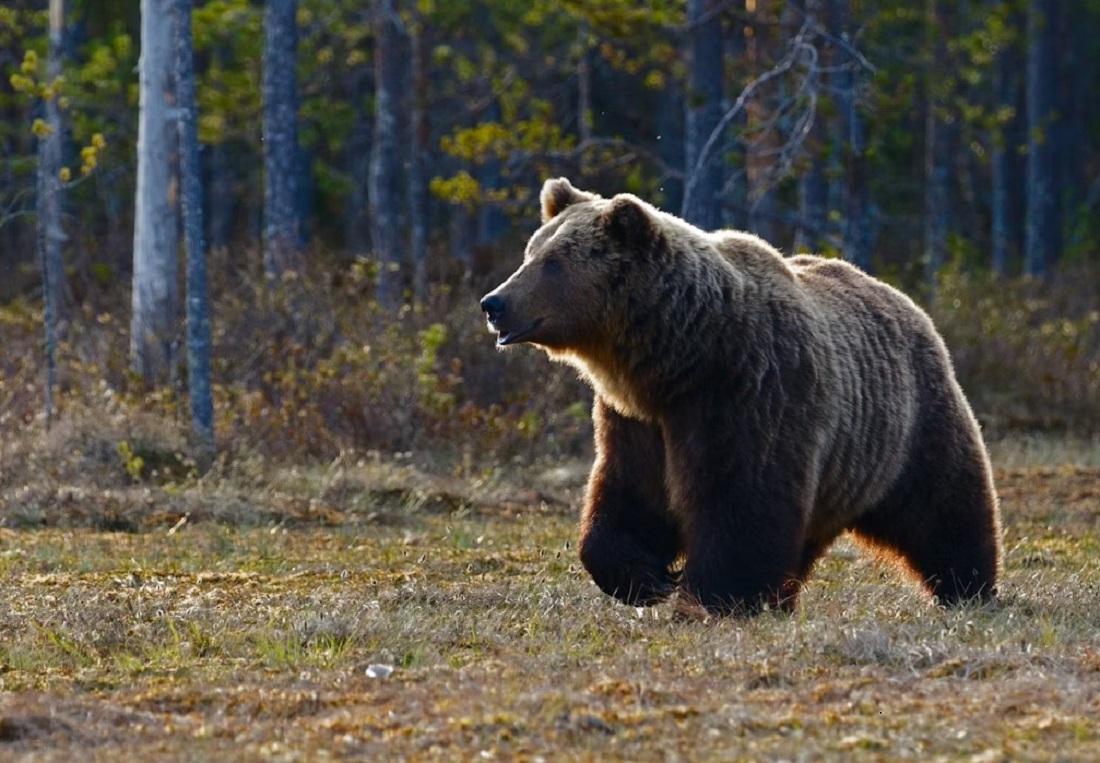
Practice and Drills for man vs. animals.
Picking up where we left off.
In the last article I discussed how people survived real bear attacks. In the majority of the cases the shooter practiced in case they ran into a bear or moose with a bad attitude. Some simply went out and fired a few shots daily to become more familiar with their guns. Some actually set up drills to help them with their speed. Some had military or law enforcement training with handguns. Some of them simply used a gun they were familiar with. We also have individuals that are trained specifically to deal with dangerous animals as part of their jobs.
Improving our chances.
Aside from practice several of our survivors had modified their guns for improved performance. In the simplest form, using a grip sleeve or tape to improve the chances of holding on to the gun were used. Some of the guns had improved sights. Some had improved triggers. I see merit to all of these modifications as long as it doesn’t interfere with the reliability of the gun. My two test mules were bought with the intention of being used for hunting and protection. I decided to only do modifications that would improve my chances of making well placed shots.
Improving the Glock.
The G20 Glock now wears Tag Precision Sights. They are very rugged and they offer the cleanest view of any fiber optic sights I have ever used. I also installed a KKM barrel in the gun. Since I use this gun for hunting as well as protection I added the barrel which made a huge improvement in accuracy. I have shot the gun a lot to test reliability and the gun has never offered to jam. I also installed aluminum base plates on the magazines. Over time the polymer base plate will bend under spring tension. While breakage is rare, there is always that chance. This eliminates it completely. I prefer to leave the Glock factory trigger alone on guns that will be used for protection. The trigger pull isn’t great but I have never had one not go bang with a factory trigger.
Improving the Redhawk.
My .44 Magnum Redhawk is a factory stock gun with the 4.2” barrel. The gun is super strong and is ready to go as a bear defense gun out of the box. The one thing I didn’t like was the sights. I replaced the front with a brass bead sight made by Fermin Garza. He also makes a rear sight that replaces the blade on Ruger sights. I used a white “U” #10 rear with the brass bead front. The sight picture is drastically improved. It is much quicker to get it on target and very precise when carefully aiming.
Don’t skimp on your holster.
I use a chest rig from Backcountry Leather Goods to carry both of the guns. The chest rig is super comfortable and gives you instant access to the guns. I had him make a holster for the
Redhawk and one for the Glocks. I simply change the holster depending on which gun I am carrying. For the purpose of drawing and shooting for this article I used the Glock and the Redhawk from this rig. I had to come up with a compromise adjustment to use both holsters as they are several inches different in length. The Glock holster was purposefully made to also carry long slide guns. It made the back strap stick out but was a good temporary solution. The straps have tons of adjustment and if set up for one or the other holsters the strap lays flat across my back. You will note this in the pictures. If carrying a revolver in a belt holster, Lance Nixon builds an excellent holster called the hiker. I have one for an N-Frame S&W. I can draw the gun and be in action quickly. It carries great, so the gun isn’t a burden. Don’t skimp on your holster. A good holster can help you get into the fight faster.
Practice and drills.
How do we prepare for the untenable? Let’s look at some of the common drills used in defensive practice against human threats. First up is the BIll Drill.
The Bill Drill
The Bill Drill is simply drawing your gun and firing 6 shots into the “A” zone or bullseye of a target set at 7 yards with the goal being to do it in 2 seconds or less. In other words the shots would have a .2 split time. Forget the YouTube videos showing the 10MM shooting a 15 shot magfull in 2 seconds. Most bears reacted to the first shot. Remember a quiet hit is better than a loud miss. When you begin practicing the Bill drill you need to focus on the front sight. We were trained to concentrate on the front sight and it still works.
In this case the A- Zone is going to be the bear’s head, specifically the area that takes in the eyes and bridge of the nose. The brain lays behind that area. Above the eyes the skull ramps into the sagittal crest and is above the brain. Speed will come with repetition and practice. I would even recommend starting this type of practice with a slow fire routine. Learn the relationship of the front site to the target. In the case of the .44 Magnum getting six shots on target in 2 seconds is difficult at best. That doesn’t make this drill useless. You will increase speed over time. Remember the first shot is the most important. Drawing and hitting the A-Zone quickly is still the most important factor.

The DA Targets “half silhouette” has proven to be great for this drill. It is self healing and you instantly see your shot placement on target. I don’t have to scramble to find my targets and staple gun. This makes it easy to just walk to the range and start shooting.
The A.D.F.G. Drill
The Alaska Department of Fish and Game knows that the agents afield can be in harm’s way at any time. I contacted the A.D.F.G. Chief Firearms & Wildlife Safety Instructor for real on the ground info from people that do this for a living. Upset bears or moose are always dangerous. This agency is tasked with trapping, monitoring and relocating animals which puts them in close proximity to them daily. Obviously they don’t want the staff to be defenseless. They are armed with proper gear to work in this environment. If they know they are going into a situation with a problematic animal they carry Remington 870 slug guns loaded with Brenneke slugs. They also carry sidearms which in this case is the 4.2” Ruger Redhawk .44 Magnum.
Aside from the proper guns the staff train and qualify yearly. One of their drills with the shotguns is with targets which measure 2’x3’ placed at an angle to simulate a moving bear. The targets are placed at distances of 15, 10 and 5 yards. The targets have a 10” center of mass scoring circle. Staff have to fire 3 shots, starting from the back target, then middle then front, one shot each target. Done in less than 5 seconds with at least two hits in the scoring circle. They also do a moving target scenario where the target (a barrel with a bear head on it) is attached to a sled pulled by an ATV. They shoot the target as it passes by. The revolvers use some of the same drills so that they are prepared with whichever arm is accessible.


As he told me: “We work on accuracy and then add some speed to the drills knowing these incidents with animals happen extremely fast.”
The Roy drill.

After talking to bear attack survivors and listening to their experiences it became clear that no one drill can prepare you for every situation. It also became apparent that speed matters. I started shooting GSSF matches last year. It was a fast learning curve. If you are going to do well, speed and accuracy are both a must. Since you have 15 seconds to fire 10 aimed shots at varying ranges, practice for the matches needs to be based on this. Having a shot timer is a huge help learning to get in a rhythm. The object is to get the split times spaced so that you finish before the beep stops the shooting. This is a case of faster isn’t always better. Learning to control your shots to get more A zone hits but finishing on time is very applicable to our bear attack practice.
I downloaded an app to my phone that you can use for dry fire practice. I will start the timer while watching TV and using an ink pen taping on anything that will make noise run 10 taps. The app counts this and shows me my overall and split times. It sounds silly but I take my phone in my shirt pocket and change to live fire when practicing. I found myself making much smoother and more accurate shots at the targets in the same amount of time. One day while thinking of the bear attacks and practice drills it hit me that I could do the same thing except add drawing from the holster to it. It worked. Practicing drawing and shooting help maintain the skill set. It has improved my speed shooting both in time and accuracy.
I set up and ran drills based on the procedures for the drills I described. I did my test drills without a warmup. I was trying to simulate what happens when you get surprised. My groups on target were plenty tight. The shot spacing showed that my shooting was consistent. There was one problem. When I started most of the shots impacted higher than I wanted. Of course this is a simple matter of not enough practice. It is also a stark reminder that to have the same survivability as the attack victims in our articles I need to practice more of this type of shooting. My draw and first shot were OK but more practice will mean more A zone hits until it becomes second nature.
| Gun Used | First Shot from the Draw | Average Split Time | Number of Shots Fired |
| Glock 20 | 2.74 Second | 1.09 Seconds | 6 |
| Ruger Redhawk | 2.32 Seconds | 1.46 Seconds | 6 |
Points to ponder.
We know it takes adequate power to penetrate bones and heavy muscles. We know it takes being aware to react quickly to the actual situation at hand. Some lessons learned from actual bear attacks that went in the bears favor help us to utilise power, awareness and ability. What about the bear attacks that ended with the death or severe injury of the person that had a gun? We should learn from them as well.
Note the pictures shooting the guns. It is obvious that the .44 has much more muzzle rise than the 10MM. That is to be expected. Something hard for people to do is practicing shooting double action with a .44 Magnum. The only way to get proficient for fast shooting is to practice. Double action shooting with a gun that has considerable recoil is a perishable skill. While it is enjoyable to shoot single action from a rest, that is not going to help you to deliver fast and accurate shots when your life depends on it.
From one attack that ended in a fatality the person that was fatally wounded pressed his gun up to the bear with the bear on him. He was using a semiautomatic 10MM. When he shot the slide moved back to pick up the next cartridge. When it reached the end of its travel, hair from the bear prevented it from going back into battery. He was unable to continue firing. The bear succumbed to the shot but not before inflicting wounds that proved fatal. In this case a revolver would have been better. Aside from the revolver being able to fire, the muzzle blast along with the hole the bullet created would cause tremendous trauma. Yes this has happened too. The victim was able to deliver a couple more shots and the bear stopped the attack. The bear did die from the shots. The attack victim survived but required a lot of stitches. Another bit of information that I gathered was about barrel length. Most but not all of the people that I interviewed favored barrels of 4” or less for their protection revolver. It is faster to get into action. While it may take another second or two to recover, in every case the first shot was the most important.
The conclusion:
Both the 10MM and .44 Magnum have their merits when it comes to self preservation with dangerous animals. The 10MM has a much higher rate of fire and the .44 Magnum is much more powerful. Obviously there are more guns and cartridges that will work for animal defense. If you can handle more recoil, handguns in .454, 480 Ruger, any of the 500s would work well. There is a growing trend to use semiautomatics in the hot .45s such as .45 Super and 460 Rowland using hard cast bullets. The thinking behind that is the same penetration as a 10MM with larger holes. What did I learn from all of this? As long as the gun and ammunition are up to the task, the person would do well to practice with his or her chosen firearm. Learn your firearms inside out. Situational awareness, practice shooting under duress and reaction time are more important than the type of gun and ammo used. What will I choose? I am going to practice extensively with all of my possible guns and whichever one I am most competent with will get the nod. At the moment I am still leaning towards my .44 4.2” Redhawk.
Hunt, but stay safe and prepared-RDY

One response to “10MM vs. .44 Magnum Part 2 by: Roy Yeager”
Well done. The muzzle against the bear info was badly needed but could be the subject of an article in itself. This is the first article I’ve seen that touches on it. Next time a “finisher” is needed I suggest you try it.