I bear-crawled for over 120 muddy yards, stalking a herd of wild sheep and trying to “touchdown”. While sitting behind a boulder, I set a small shooting bag down and rested the bottom of the Spohr N670 grip on it. When the moment came, I slowly pressed the trigger, and the gun went off, echoing across the plateau and surrounding valleys.
Luck of the Draw
As any serious hunter knows, wild sheep hunts are either too expensive for most people, or tags for wild rams are extremely hard to draw. You either spend over 20 years collecting points, or you’re one lucky person among a few hundred—or even over a thousand—applicants.
Many hunters dream about sheep hunting. I always hoped to draw at least a bighorn ewe tag, and little did I know I would be that lucky this year.
Draw Results
The first thing I did that late May morning after opening my eyes was check the Game and Fish draw results on my phone. Like every year, it started with “unsuccessful” for mountain goat, bison, moose, and bighorn sheep—and then I saw it. I rubbed my eyes to clear away the sleep and read it again: Ewe bighorn sheep – SUCCESSFUL!
That result changed everything, and planning for the hunt began right away.
Summer Scouting
During the summer, I made a scouting trip, and Game and Fish provided the ewe tag winners with some very good info. While the season was scheduled to run through mid-November—when the sheep would have migrated off the mountain and become much easier to hunt—I wanted the full mountain sheep experience. This was my first-ever sheep tag, and there was no way I was missing opening day. To make it more challenging, I planned to harvest one with a revolver. The gun of choice was a high-end revolver made by Spohr: model N670 chambered in 44 Magnum. For ammo, I loaded 200-grain, all-copper Raptor bullets from Cutting Edge Bullets that they had sent me for the season.

Season Opener
The area I had a tag for was in grizzly country. It wasn’t high-density, but it was still grizzly. Since sheep stay out in the open most of the day, and I only needed a 45-minute to hour-long hike to get in, I decided to treat this as a series of day hunts instead of a multi-day backpack trip. I camped out of my vehicle for safety and started hiking in at first light.
At Camp
I arrived at my planned camping spot the evening before, and it was encouraging not to see any other hunters on that road. After setting up camp and doing a final gear check, I went to bed. I’d be lying if I said I was too excited to sleep; while I was definitely excited for the hunt, I was mostly just tired. I slept very well. It was refreshing to drop off in the colder weather after weeks of summer heat at home.
First Frost
Morning brought the first frost of the season. It was cold, but manageable, and after my morning ritual just past first light, I hit the trail. I slowly came out onto the first opening on top of the ridge and started glassing as I went. Nothing there. As I walked along the ridge, I started seeing more terrain open up across the valley, wondering if I’d even find them—especially since I hadn’t spotted any during my summer scouting.
Spooked

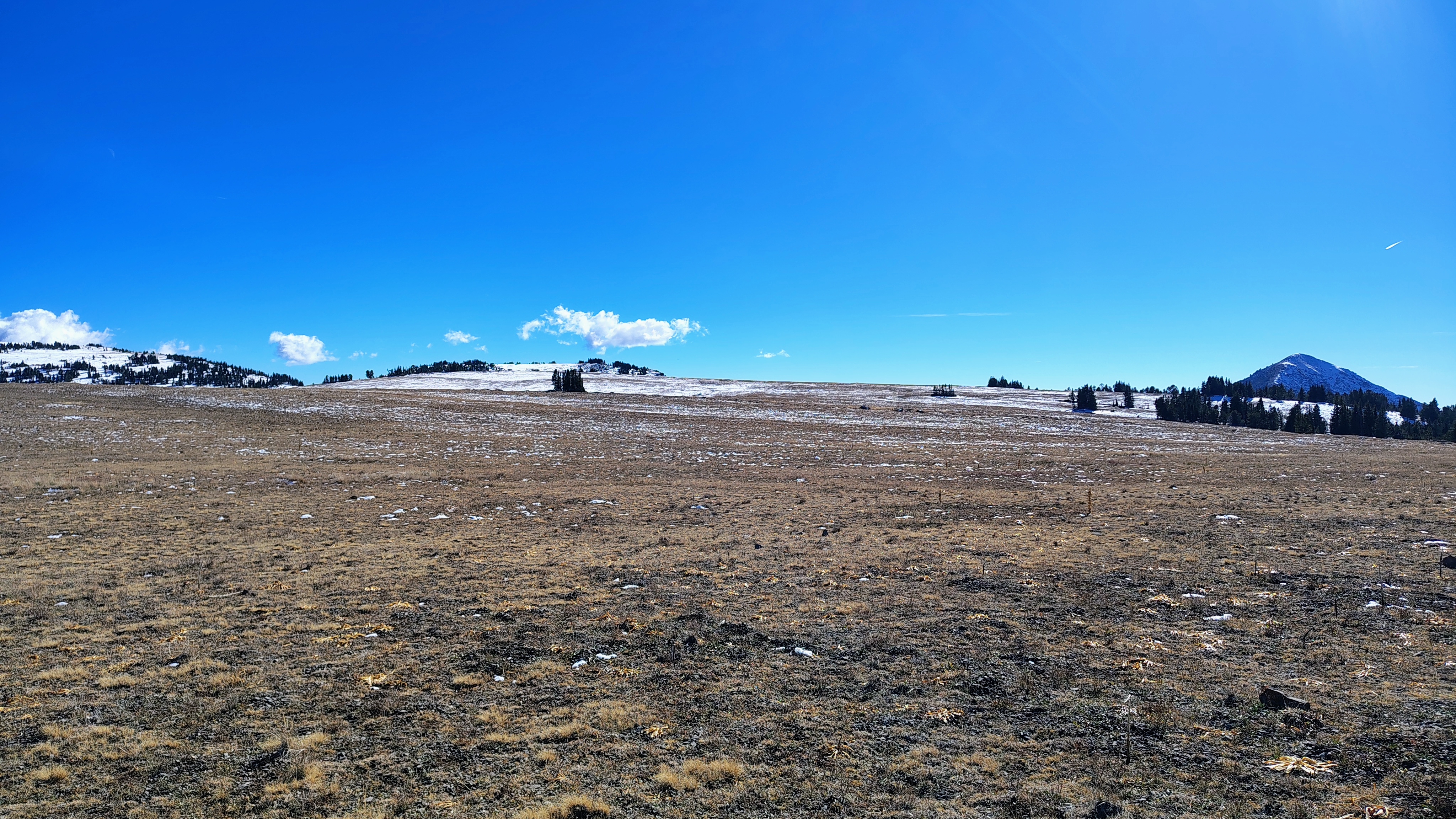
After pushing through another patch of timber, I stepped out into a clearing and finally saw the plateau where I expected them to be. My mistake was coming too far out of cover and immediately glassing the furthest parts of the plateau instead of checking the close-in terrain first. When I finally checked the nearby area, there they were: a band of about 25 sheep, roughly 500 yards out. I saw them, but the problem was they had seen me first. I tried to back out slowly and find cover to loop around, but by the time I got into position, the sheep were gone.
The first stalk was over before it started. I relocated them pretty fast, but they dropped around a hill and out of sight. Messing up my first opportunity was not great, but the important thing was that I found them, and I hoped to relocate them again.
Second Stalk
This time I was more careful, glassing all around as I moved rather than just in the direction I’d last seen them. Then I noticed a single ewe off to the opposite side, barely over the ridge near the tree line, feeding. I couldn’t see if there were any others with her. I shifted gears and decided to close the distance to check. As I got closer, I spotted a lamb with her, but I still couldn’t tell if any other sheep were around. It was tough to judge, considering I could barely see the tops of their backs over the rise. The wind was calm, which is nice for long shots if needed, but not great for stalking close.
Out of Cover
I eventually ran out of cover and had to take a peek. The sheep were still there, but outside my absolute max range of 200 yards. As I tried to inch closer to check for the rest of the herd, I ended up bumping them. After confirming there were no other adults with them, I didn’t feel too bad about the failed stalk. Lambs have a decent survival rate without their mothers as long as they stay with the herd, though in this case, whether the lamb would find the others was a gamble.
On my way to the next ridge, I relocated the ewe and her lamb heading that direction. That was a good sign. Sure enough, I found sheep over there—bedded down near a cliff face. With only four hours of daylight left, I didn’t have enough time to make a stalk over a snow-covered hill without spooking them. My only option was to glass, watch where they moved, and hike out before dark. They fed for a while but never came any closer, eventually working their way over the back of the hill.
The next day, up the hill
The next morning, I was even more careful. No sheep on the first ridge, and no fresh sign either. I hoped they’d be on the hill where I’d left them the day before. As I neared my intended glassing spot, I had to cross an open field—always a risky move. Sure enough, that’s when I bumped into a smaller herd. The problem was mutual: they saw me the exact second I saw them. At 300 to 350 yards, that shot would have been very doable with a single-shot pistol, especially since they gave me plenty of time. With a revolver, though, it was almost twice my max range. They spooked and bolted out of sight, heading toward the hill where I’d seen sheep the day before.
Rushing
I rushed to top of that hill to glass, but couldn’t relocate them. I kept glassing, and a few moments later, I noticed a single sheep just 40 yards under me—a young yearling ram, not very bright. He just stood there staring at me. After he finally trotted off, I followed him, hoping he’d lead me back to the main herd. Aside from providing some entertainment, it didn’t pan out; I bumped into him a few times, and each time he let me get within 30 yards before running off again.

Giving up on the yearling, I went back to serious glassing. A few minutes later, I relocated the smaller herd from that morning, bedded down at the exact same cliff as the previous day. This time, I had plenty of daylight left. The sheep were only three-quarters of a mile away. My best option was to loop around the top of the hill and come down from the opposite side toward a small stand of timber, which looked like it would set me up for a good shot.
Third Stalk
I started the stalk. Going around and climbing the hill took much less time than expected. When I reached the far side, I found a maze of fresh tracks and sign—no surprise, given what I’d seen the day before. The snow was melting but still crunchy underfoot, forcing me to move at a snail’s pace. By the time I reached the trees, I realized I’d already gone past where the sheep should have been. The terrain looked different from this angle, and I had completely misjudged my position.

Assuming I’d blown it and spooked them long ago, I looked out toward the plateau and spotted them right back where I’d first bumped into them earlier that day. They didn’t seem panicked; it looked like they had simply drifted back once they couldn’t see me anymore. While I’d wasted time on the failed stalk, it was great that they were moving back toward my exit route, which would make the pack-out much shorter if I scored.
Final Stalk
They were heading back toward the spot where I’d seen the opening-morning sheep. There’s very little cover on the plateau, meaning I had to make another massive loop. When I checked my tracker later that evening, I realized I’d logged over 31,000 steps that day.
DEER!
As I walked the edge of the plateau, I stumbled across a phenomenal buck—easily the widest mule deer I have ever seen in my life, pushing 30 inches. I still had a deer tag in my pocket, but I could only watch; deer season had closed more than two weeks earlier. The buck drifted off, and I got back to the sheep hunt.
On my face…
Peeking from the tree line, I glassed the area—empty. Just as I was wondering where they’d vanished to, I caught movement way closer: about 300 yards to my left. Luckily, they were oblivious to me this time. I dropped to a bear-crawl to keep concealed, aiming for a prominent boulder to use as a rest. By the time I crawled into position, the sheep had moved lower, and I could only see the tops of their backs. There was no cover between us. I had to bear-crawl further right, weaving through some scattered timber, hoping for a clearer lane.
Settled
When I finally got settled, I had a clear view of the herd—and the hunting equivalent of “buck fever” hit me hard. I ranged them at 185 yards. I rested the revolver grip on a small shooting bag atop the boulder. After taking a deep breath to steady myself, I cocked the hammer and picked my target. There were 12 sheep in the group, and I settled the crosshairs on an ewe offering a broadside shot.
BANG!
I started applying pressure on the trigger. The gun went off, and the noise echoed across the canyons. I did not feel good about that shot; in the end, it was not stable enough. The reaction wasn’t what I wanted; the whole band ran further down the hill and out of sight. I waited a few minutes, grabbed my pack, and walked over to check for blood. Finding nothing at the initial spot, I slowly worked my way down the hillside and began spotting them just below me.
Bright
There was no cover between us, but the sun was directly behind me, and the sun was at an angle parallel to the hill’s angle. Looking at the sun is not easy for anyone. I always wanted to try this. It was a gamble whether they’d spot me, but the sunshine bought me just enough time to slip into a shooting position. I looked at the group, counting them again: 12 sheep again, and not a single one showed any sign of injury. It was a clean miss.
They were under 100 yards. I raised the gun again and settled the sights on a ewe on the far right. The 200-grain Raptor was on its way. The sheep started running, but this time, their reaction was different; they were in full flight.
“Did I miss again? They’re all running.”
As the herd went from a downhill sprint to an uphill climb, one ewe separated from the group and kept running down into a broken, rocky draw out of my sight. I knew instantly she was hit and wouldn’t go far. I tracked her down among the rocks. My plan had finally worked. It was a great relief when I reached her and confirmed it was indeed a ewe. Young rams can look awfully similar, and harvesting the wrong animal is a nightmare scenario I wanted no part of.
On the ground

After taking a few quick photos, the real work began. I knew I didn’t have enough daylight left to pack it out. I quartered the ewe, hung the meat and cape securely in a tree, and started the hike out. Traveling light made me twice as fast, and the last thing I wanted was to spend extra time stumbling around grizzly country in the dark.

The next morning, I hiked back in to retrieve the meat. This hunt was an incredible experience from start to finish. Total step count was more than 78 thousands in two and a half days. I can only hope I get the chance to do it again—if not for a ram, then maybe I’ll draw another ewe tag somewhere down the road.

Check out Spohr Revolvers in stock in the USA (We constantly import more):

Leave a Reply